INFRASTRUCTURE IDEAL FOR GROWTH
INFRASTRUCTURE IDEAL FOR GROWTH
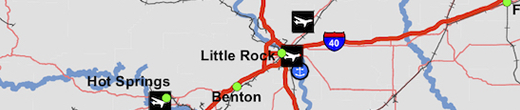
With a location halfway between Mexico City and Montreal, more than 100 million people live within a 400-mile radius of Arkansas. Widen that to a 550-mile radius and the market reaches about 140 million people, roughly 40 percent of the total U.S. population. Arkansas’ transportation network is ideally suited to meet the needs of business and provides easy access to U.S. markets around the world. Highlights include 1,800+ miles of navigable waterways, almost 2,600 miles of Class I railroads, and 16,418 miles of state and U.S. highways.
Roads
- Over 16,400 miles of state and U.S. highways and key interstate corridors like I-40, I-30, and I-55 linking major domestic and international markets.
- Provides efficient east-west and north-south connectivity across the central U.S.
Rail
- Served by three Class I rail systems (Union Pacific, BNSF, Canadian Pacific Kansas City) plus numerous short-line railroads, totaling more than 2,500 miles of track.
- Robust freight rail network supports major industrial and distribution sectors, enhancing multimodal logistics options.
Airports
- Major air connectivity comes from Bill and Hillary Clinton National Airport in Little Rock and Northwest Arkansas National Airport near Bentonville, each offering daily non-stop service to major U.S. hub airports, with one-stop connections to international destinations worldwide.
- The state also supports several regional and general aviation airports that enhance business access and support corporate travel and air cargo.
Water
- 1,800+ miles of navigable waterways (3rd most in U.S.), including the McClellan-Kerr Arkansas River Navigation System and the Mississippi River, with multiple ports such as Little Rock, Pine Bluff, Fort Smith, Osceola, and West Memphis.
- Ports provide cost-effective access to global markets via intermodal barge, rail, and highway connections.