Hitting the Bullseye
The Industry at a Glance
- Home to the Duck Hunting Capital of the World: Stuttgart, Arkansas
- 3rd in economic output per capita in the arms and ammunition industry (Source: National Shooting Sports Foundation)
- 3rd Most Gun-Friendly State (Source: Ammo.com)
- 3rd Largest Exporter of Firearms and Ammunitions in the U.S. (Source: Global Trade Atlas, 2023)
- 8 pro-gun bills passed into law during the 2023 legislative session
- $2.3B in economic output
INFRASTRUCTURE
- Three U.S. interstates connecting east and west coasts, and the Canada and Mexico borders
- 16,418 miles of state and U.S. Highways – 12th largest system in the U.S.
- Eight intermodal freight facilities with four riverports
- 2,542 miles of Class 1 rail systems
- #3 in the nation with 1,000 miles of inland, navigable waterways
- Approximately 100 public airports including Clinton National, Northwest Arkansas National, and close proximity to Memphis International and the Fed-Ex hub
Well-trained workforce
- 7th highest percentage of manufacturing employment (Source: Business Facilities)
- 1.36M skilled and trained workforce
- 12% of Arkansas’ workforce is employed in manufacturing
- 8,400+ people employed in the arms and ammunitions industry.
Business Climate in Arkansas
- #3 Least Expensive State for Starting a Small Business (Source: SimplifyLLC)
- #2 on the Cost of Living Index (Source: C2ER)
- 7th highest percentage of manufacturing employment (Source: Business Facilities)
EDUCATION
- 50 colleges, universities & 2-year colleges throughout Arkansas
- 2,100+ engineering degrees awarded each year
- 150k+ students enrolled at an Arkansas institution of higher learning
- Black River Technical College is 1 of only 11 accredited gunsmithing programs in the US – and the only institution connected to a law enforcement training academy.
- Ozarka College's Precision Machining program prepares students for a career in manufacturing, providing them with skills in manual machining and operation of CNC mills and lathes.
Firearms & Ammunition Industry
Executive Overview
Arkansas is Primed for Success
Home to the duck hunting capital of the world and the 3rd most gun-friendly state, Arkansas is the natural choice for firearms and ammunition companies to find success.
Watch MoreFrom the newsroom
LaCroix Precision Optics Expands in Batesville, Arkansas, Creating 107 New Jobs
LaCroix Precision Optics is expanding in Batesville, Arkansas, creating 107 new jobs.
ReadWhite River Energetics Expands in Des Arc, Creates 100 New Jobs
White River Energetics is expanding in Des Arc, creating 100 new jobs.
ReadAfter Meeting with Governor Sanders During Her European Trade Mission, Walther Announces $30M Expansion in Fort Smith, Arkansas
Walther is expanding in Fort Smith, Arkansas with a capital investment of up to $30 millio...
Readfrom the blog
The Legacy of Economic Development in Arkansas
May 04, 2020As we embark on Economic Development Week, the Arkansas Economic Development Commission (AEDC) is proud to have been a part of the celebration for 65 years.
This week, the Arkansas Economic Development Commission and the Arkansas Economic Developers and Chamber Executives will join communities throughout the state to acknowledge the positive impact economic developers have in every county within Arkansas. To celebrate Economic Development Week, I would like to pay tribute to the hardworking economic developers that have served at AEDC by taking a brief look at our organization’s history.
AEDC’s beginnings can be traced to the end of World War II when agrarian economies began to be replaced by manufacturing. During this time, Arkansas faced high population losses, high unemployment, and a deteriorating economy as many Arkansans left the state to find job opportunities elsewhere.
By the mid-1950s, the state’s government and business leaders knew that something drastic needed to be done to stabilize the economy, and in 1955, the Arkansas General Assembly passed Act 404 creating AEDC’s forerunner, the Arkansas Industrial Development Commission (AIDC). Under the leadership of Gov. Orval Faubus and AIDC Chairman Winthrop Rockefeller, the Commission was charged to bring new industry to the state, expand existing industries, and combine labor, industry, and agriculture to raise the state’s standard of living. The original seven-member commission was later increased to 16 members, appointed by the governor for four-year terms.
The formation of the AIDC helped bridge the state’s agriculture-based economy to one focused on the growing manufacturing economy. In its early years, intensive recruitment efforts brought such industries as clothing and textiles, wood and paper products, and food processing.
AIDC located its first industry – Gay Apparels Inc in Cotter – on April 1, 1955. By the end of Chairman Rockefeller’s time at AIDC, over 600 companies had been recruited to Arkansas, creating over 90,000 new jobs.
During his time as Chairman, Rockefeller created the “Committee of 100” and raised an additional $200,000 to supplement the $75,000 AIDC operating budget. To join, business leaders from every county in the state were asked to give $100. The money was used to create the Arkansas Industrial Development Foundation, the forerunner to today’s Arkansas Economic Development Foundation.
Knowing that strong communities lead to economic success, Arkansas has always focused on collaboration with communities. The same act that created AIDC also provided measures to allow communities to issue bonds to finance a portion of the total costs of industrial land, improvements, buildings, and equipment. Later, the state authorized towns and counties to issue special obligation revenue bonds for securing and developing industry.
State leaders also knew that Arkansas was uniquely positioned as an ideal location to get goods to market quickly. When the AIDC was created, the state had slightly more than 10,000 miles of state highways – not nearly enough miles to support a speedy and efficient transportation network required for manufacturing. During the 1960s, AIDC was instrumental in helping to establish Arkansas’ interstate highway network and, later, the Arkansas River Navigation Project, which was the final link in providing the state with a first-class intermodal transportation system.
Now that Arkansas was quickly growing in the national manufacturing scene, the AIDC looked beyond the nation’s borders to find new opportunities. In 1974, AIDC landed its first recruitment project from overseas, with the location of Bekaert Steel in Van Buren. In 1976, an office was established in Brussels to recruit European industry to the state as well as to help export agricultural and industrial products in Europe. A similar office was established in Japan in 1986. Today, AEDC maintains offices in Germany, Japan, and China and our top export is not agriculture, but aviation and aerospace.
While the state had seen tremendous growth in the manufacturing sector, the late 1970s and early 1980s brought new challenges. In 1979, AIDC became the Arkansas Economic Development Commission to reflect more diverse economic opportunities beyond manufacturing. The name changed several more times – back to AIDC then the Arkansas Department of Economic Development and finally once again the Arkansas Economic Development Commission, a name that remains to this day.
Act 182 of 2003 established the Consolidated Incentive Act, a game-changer for AEDC. The act consolidated six previously existing incentives into one package, added new incentives for targeted businesses, and expanded opportunities for qualified businesses to earn income tax credits based on research and development expenditures. Finally, the act also promoted a regional approach to economic development by rewarding those counties that work together through a formal compact in which they all reap the benefits of newly located business and industry by sharing the new revenues that result from new locations or expansions. The act was amended in 2017 to make the state’s incentives performance-based to ensure the state’s taxpayers always receive a positive return on their investments in business and industry moving into the state
On behalf of the Arkansas Economic Development Commission – thank you to everyone on the economic development team in Arkansas: to elected officials and local economic developers, educators, and all that are involved in workforce development, to those that help businesses run smoothly and to all the job creators in Arkansas. You make Arkansas a great place to live, and it is an honor for my team and me to work with you.
.png?sfvrsn=36395b60_1 "circle-cropped (17)") |
Blog post contributed by: |








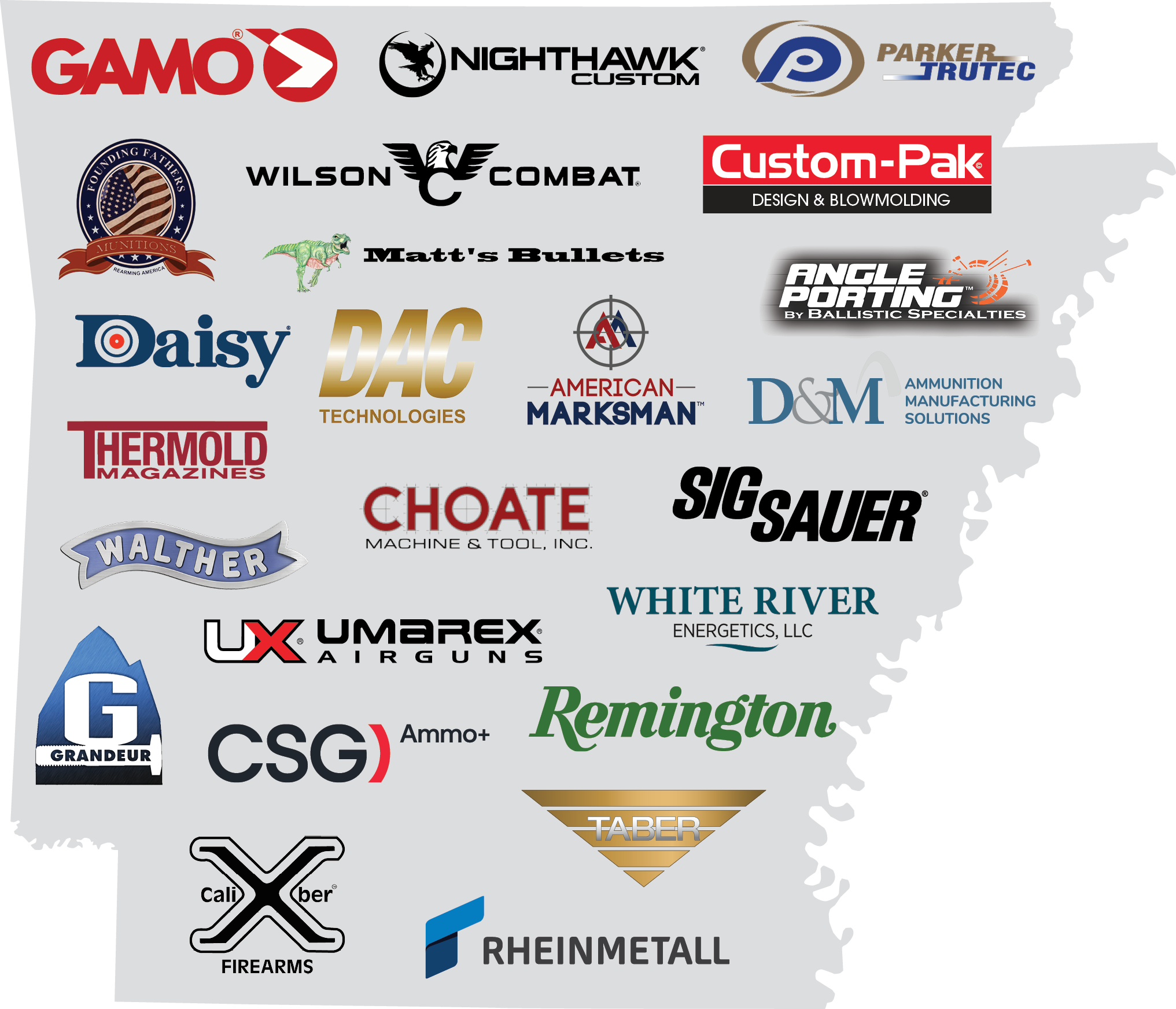
At AEDC, we know economic advancement doesn’t happen by accident. We work strategically with businesses and communities to create strong economic opportunities, making Arkansas the natural choice for success. Here are some examples of businesses that are thriving!






Arkansas offers a range of competitive incentives for businesses looking to open, expand or relocate.
