Hitting the Bullseye
The Industry at a Glance
- Home to the Duck Hunting Capital of the World: Stuttgart, Arkansas
- 3rd in economic output per capita in the arms and ammunition industry (Source: National Shooting Sports Foundation)
- 3rd Most Gun-Friendly State (Source: Ammo.com)
- 3rd Largest Exporter of Firearms and Ammunitions in the U.S. (Source: Global Trade Atlas, 2023)
- 8 pro-gun bills passed into law during the 2023 legislative session
- $2.3B in economic output
INFRASTRUCTURE
- Three U.S. interstates connecting east and west coasts, and the Canada and Mexico borders
- 16,418 miles of state and U.S. Highways – 12th largest system in the U.S.
- Eight intermodal freight facilities with four riverports
- 2,542 miles of Class 1 rail systems
- #3 in the nation with 1,000 miles of inland, navigable waterways
- Approximately 100 public airports including Clinton National, Northwest Arkansas National, and close proximity to Memphis International and the Fed-Ex hub
Well-trained workforce
- 7th highest percentage of manufacturing employment (Source: Business Facilities)
- 1.36M skilled and trained workforce
- 12% of Arkansas’ workforce is employed in manufacturing
- 8,400+ people employed in the arms and ammunitions industry.
Business Climate in Arkansas
- #3 Least Expensive State for Starting a Small Business (Source: SimplifyLLC)
- #2 on the Cost of Living Index (Source: C2ER)
- 7th highest percentage of manufacturing employment (Source: Business Facilities)
EDUCATION
- 50 colleges, universities & 2-year colleges throughout Arkansas
- 2,100+ engineering degrees awarded each year
- 150k+ students enrolled at an Arkansas institution of higher learning
- Black River Technical College is 1 of only 11 accredited gunsmithing programs in the US – and the only institution connected to a law enforcement training academy.
- Ozarka College's Precision Machining program prepares students for a career in manufacturing, providing them with skills in manual machining and operation of CNC mills and lathes.
Firearms & Ammunition Industry
Executive Overview
Arkansas is Primed for Success
Home to the duck hunting capital of the world and the 3rd most gun-friendly state, Arkansas is the natural choice for firearms and ammunition companies to find success.
Watch MoreFrom the newsroom
LaCroix Precision Optics Expands in Batesville, Arkansas, Creating 107 New Jobs
LaCroix Precision Optics is expanding in Batesville, Arkansas, creating 107 new jobs.
ReadWhite River Energetics Expands in Des Arc, Creates 100 New Jobs
White River Energetics is expanding in Des Arc, creating 100 new jobs.
ReadAfter Meeting with Governor Sanders During Her European Trade Mission, Walther Announces $30M Expansion in Fort Smith, Arkansas
Walther is expanding in Fort Smith, Arkansas with a capital investment of up to $30 millio...
Readfrom the blog
Arkansas is Committed to Workforce Training
November 11, 2017Preparing homegrown talent to fill high-paying jobs in Arkansas is a must. As a follow up to our post about developing the talent pipeline through quality educational programs in Arkansas, this post examines how education and industry in Arkansas are working together to reduce skills gaps for a vibrant workforce.
Making Vocational Education Work for Arkansas
Arkansas has restructured high school vocational education to help students make a smoother transition from school to post-secondary education and/or the workplace. Career opportunities, High Schools that Work, and youth apprenticeships are part of this systemic change that provides students with academically challenging courses. There are 26 Arkansas high schools that participate through the Arkansas Department of Career Education. Arkansas also touts five high schools with a focus on computer science. This number is expected to grow, supported by the passing of the Arkansas Coding Initiative in 2015.
Workforce Development
Workforce development is a priority of the state’s community and technical colleges and institutes, which work with business and industry leaders to meet existing and new workforce needs. More than 95 percent of the state’s population lives within a 30-mile radius of one of these institutions.
At AEDC, we have business managers who help businesses and industries create formal workforce development groups to identify common training needs in their communities. These consortia, as well as individual companies, are eligible for state-funded training grants. Additionally, AEDC and our partners developed the Arkansas Career Readiness Certificate Program, which allows employers to identify and locate the skilled workforce required to maintain global competitiveness.
The state is transitioning to the National Career Readiness Certification (NCRC), which was developed after Arkansas’s and other states’ certificate programs, to allow additional visibility of our workforce on a national level. The NCRC allows prospective employees the ability to document the skills that they possess and assists companies with a method of matching potential workforce with existing job openings, thus reducing turnover and increasing profitability.
Specialized Workforce Training
Specialized workforce training in Arkansas helps meet the needs of both employers and residents in the state. Aviation Maintenance Technology is a program offered in five locations in Arkansas to prepare students to take the Federal Aeronautics Administration exam to become a licensed aviation mechanic.
Henderson State University’s Department of Aviation offers a four-year Bachelor of Science degree specifically in aviation. Experienced faculty, flight instructors and 15 aircraft provide students with the training and education necessary to prepare them for a career in the professional aviation industry in the safest environment possible, whether they want to become a pilot for the airlines, manage the airports they serve or manage the fleet they fly.
The UTeach Institute partners with 46 universities to implement UTeach programs across 22 states nationwide. Two of these universities are located in Arkansas – University of Arkansas, Fayetteville and the University of Central Arkansas. Graduates of these programs are projected to teach approximately 110,000 secondary science, technology, engineering and mathematics (STEM) students by 2020.
Connecting Educators & Industry
The Modern Workplace Program was created to facilitate the connection & communication between educators and industry representatives. Educators and industry representatives collaborate to create an education environment that allows our emerging workforce to lead productive lives and satisfy the needs of Arkansas businesses.
Public-Private Partnerships
Collaboration often yields the best results. Several public-private partnerships within the state exist to provide professional development in Arkansas to help businesses maintain a skilled workforce and help Arkansans secure high-paying jobs.
For example, Green Bay Packaging in Morrilton was having a difficult time with skill upgrades for existing maintenance employees and developing a pipeline of new employees to backfill positions vacated due to retirement and internal promotions. Arkansas Tech University in Ozark and Green Bay Packaging, in conjunction with leadership and resources from AEDC and the Arkansas Department of Workforce Services, created a training center specifically targeted at industrial technical skills related to mechanical, electrical and instrumentation maintenance to advance incumbent employees and skill upgrades for top journeymen. Employees from other surrounding companies take advantage of this training center as well.








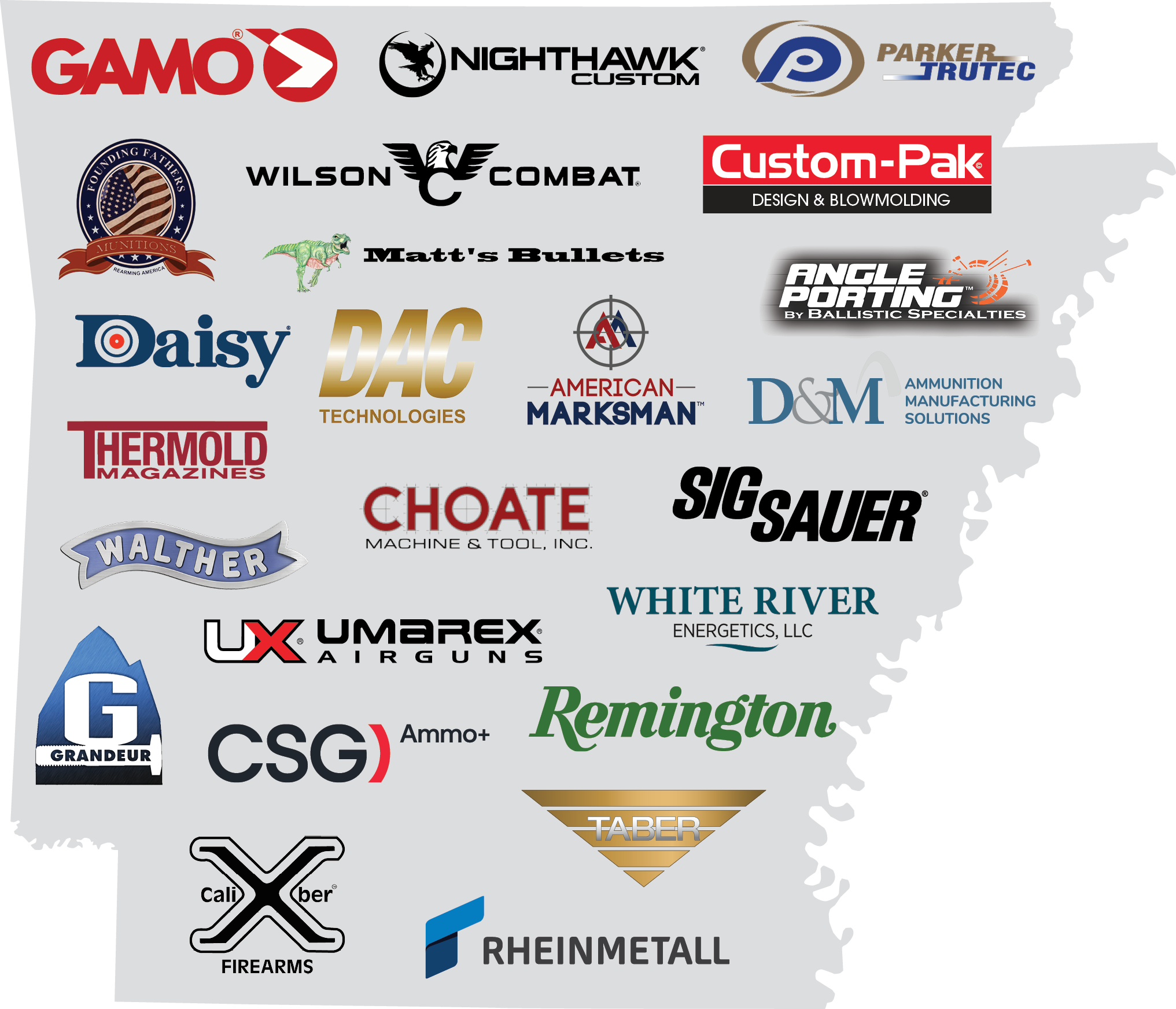
At AEDC, we know economic advancement doesn’t happen by accident. We work strategically with businesses and communities to create strong economic opportunities, making Arkansas the natural choice for success. Here are some examples of businesses that are thriving!





Arkansas offers a range of competitive incentives for businesses looking to open, expand or relocate.
